


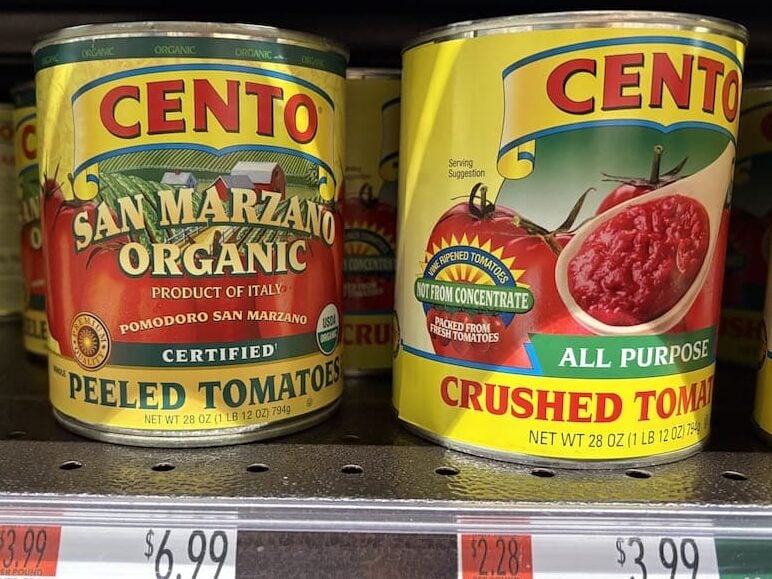
Just when you thought it was safe to buy canned tomatoes, a San Marzano tomato scandal hits the California courts. The extremely popular Cento San Marzano tomato has been accused of misleading the public with the label design of their cans. This all ties back to Italy’s PDO (Protected Designation of Origin) program, which awards special naming rights to products made according to traditional methods. Some wines carry a DOC (Designated Origin of Control) or DOCG (Designated Origin of Geographic Control) while ingredients like cheese and tomatoes are eligible for DOP (Designated Origin of Protection) certification. Although Cento’s San Marzano products carry a “Certified” identifier on their label, the product inside is not certified through the Consortium of San Marzano. So the use of the word “certified” is, in the eyes of this lawsuit, misleading to consumers.
What Is a San Marzano Tomato?
Back in the early 1900s, the growing southern Italian diaspora provided a huge market for food from the Italian south, including tomatoes. There were no great tomatoes in the US at the time, dispite the tomato originating in the Americas before being introduced to Europe in the 16th century. Italian tomato growers developed the San Marzano (in the town of the same name) by cross-breeding other tomato cultivars. The resulting tomato is slim, meaty, and balanced in flavor. It’s also perfect for canning!
The San Marzano tomato became ubiquitous because it represented THE imported Italian canned tomato, grown in the rich volcanic soil surrounding Mount Vesuvius. Mythology made this cultivar incredibly sought-after, but several companies cut into the Italian market by growing this cultivar outside its region of origin. Farms in California started growing them in the 1930s while heavy import tarrifs made Italian tomatoes inaccesible. The European Union eventually devised a certification program to help the Italian companies rise above their competition. And so the PDO program accepted San Marzano tomatoes as a protected good in 1996.
What Does it Take to be DOP?
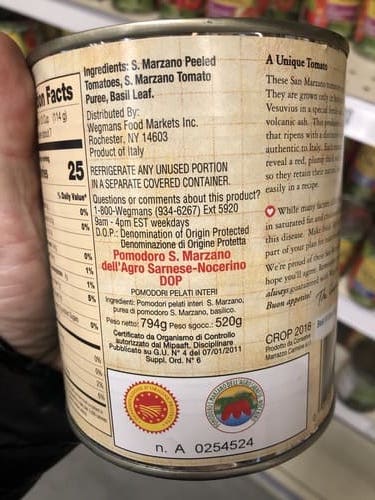
A tomato doesn’t just have to be the right seed to become eligible for protection, it also has to fulfill a series of additional requirements. In order to become certified, San Marzano DOP tomatoes must be harvested by hand, trained vertically, grown within the 70 square mile Agro Sarnese-Nocerino region, and each company is limited in the number of tons they may certify.
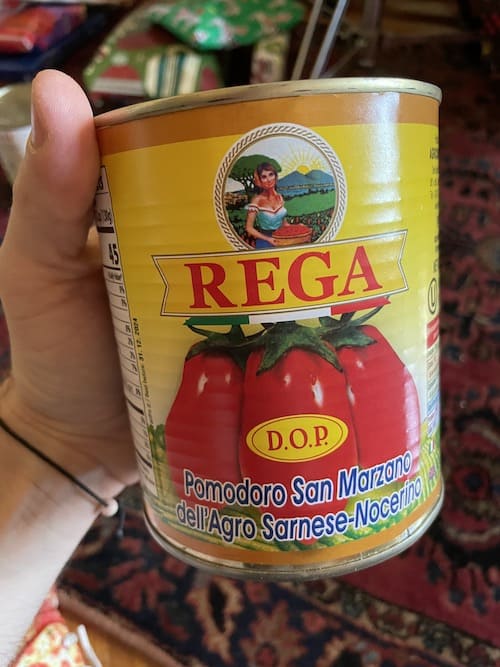
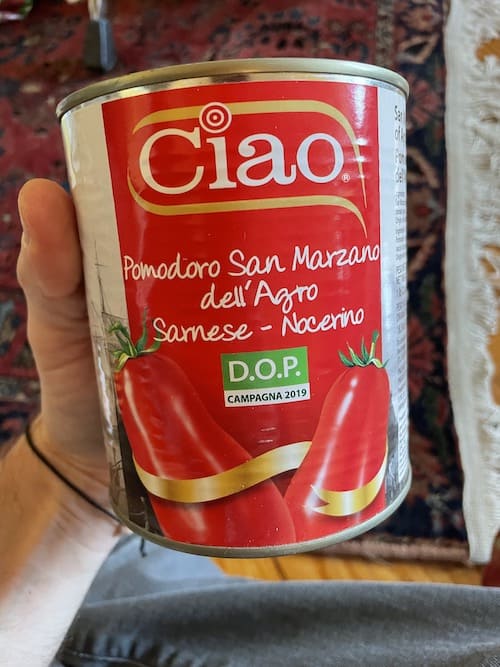
With all these requirements, it’s very expensive to produce San Marzano DOP. If you see tomatoes in the store with that label but they’re on sale for $1.99, there’s no way they’re the real deal. That doesn’t mean all the expensive tomatoes are good, it just means the cheap ones cannot be DOP. The label on a can of DOP San Marzano tomatoes must display several pieces of information:
- San Marzano cultivar indication
- the letters D.O.P.
- The phrase “dell’Agro Sarnese-Nocerino” indicating the area of production
- Logo of the San Marzano Tomato consortium
- Logo of the EU’s DOP products
- Index number, unique to each can.

What About Taste?
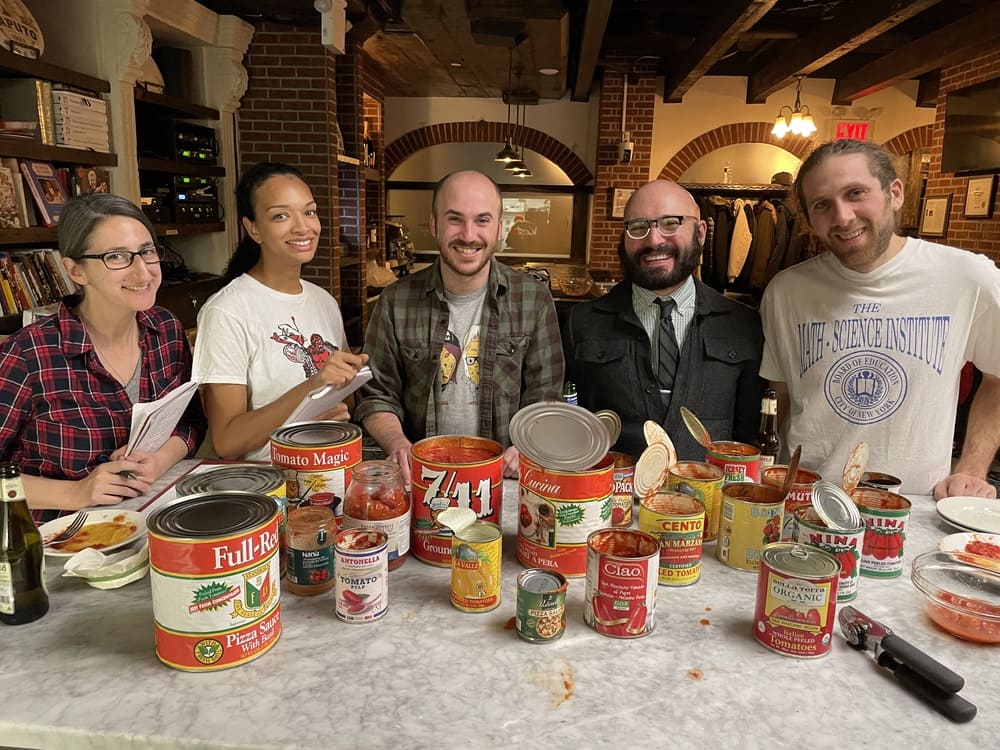
I’m no fan of confusing marketing practices, but the truth is that I really like these Cento tomatoes! We’ve done multiple blind taste tests and they always do well. I’m a firm believer that if something tastes good, it IS good! That being said, all the fraud around San Marzano tomatoes has left a bad taste in my mouth to extent that I don’t personally recommend them. There are excellent canned tomatoes from New Jersey and California and they are what they say they are. Some Italian canned tomatoes are fantastic! I love Ciao, Mutti, and Rega but sometimes it’s easier to buy somethign domestic. Don’t be duped by a label, trust your taste buds.
The Court Case
This actually isn’t the first time this kind of case has come up. A few years back there was one that got dismissed, as I imagine this one will. Feel free to read about this new San Marzano tomato fraud case that was filed in May 2026, Andrich et al v. Cento Fine Foods Inc. Or check out the 2019 San Marzano tomato fraud case Snarr et al. v. Cento Fine Foods Inc.
It’s worth stating that there’s a long history of food fraud in Italy. Olive oil is a big one here. If you’re curious about that, check out the fantastic book Extra Virginity by Tom Mueller. With tomatoes, it’s tricky because the DOP law applies only in the European Union, so in the US it’s technically not illegal to mislabel a can of tomatoes with the EU’s labeling standards. There have been many instances of companies mislabeling their tomato cans. Getting busted before leaving an Italian port means potential fines, which actually happened recently with cans of Cento tomatoes.
All that being said, the whole San Marzano situation is pretty tricky. In theory, they’re wonderful tomatoes that work great for pasta sauces and as a crushed topping for Italian pizza styles. It’s just too bad that in the real world the production area of Sarnese-Nocerino is just too small to meet global demand. It’s possible you’ve never really eaten a San Marzano tomato dispite thinking you have! Again, all that really matters is taste so keep eating the tomato that makes you happy.
